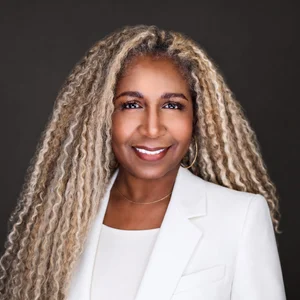
Short answer: Choose a headshot when you need one clear image for a business card, a LinkedIn profile or a directory. Choose branding portraits when you need to show how you work, in your own setting, before a prospect ever meets you. The question that decides it is where the image will be used.
Professional Image Minute No. 08 - Yevette Lynn Photography, Kingsport, Tennessee
Key takeaways
A headshot answers one question: who is this person. Branding portraits answer a second one: what is it like to work with them.
The deciding question is the end use of the image, not how much you want to be photographed.
A headshot session includes two professionally retouched images. A branding portrait session is longer, with an outfit change and a plan for each image.
Starting with a headshot and booking branding portraits later is a sound order, not a compromise.
Using a headshot where a branding image is called for leaves part of your story untold.
Watch: Headshot or Branding Portraits
The Professional Image Minute is one minute on professional image. This episode separates the two services by the one question I ask first. The full transcript is at the end of this post. The sections below take each idea and show what it changes in practice.
What is the difference between a headshot and branding portraits?
A headshot has one job: to introduce you. Branding portraits have a different job: to show how you work, where you work and what your work looks like.
Most people assume a headshot means looking straight at the camera, and for the main frame that is usually right. What surprises clients is that they have more than one option even within a headshot: a direct, composed expression, and a second image with a different feel, since two finished images are included. A studio headshot session includes a curated proof gallery of five images, from which two are professionally retouched and delivered as finals, chosen for the profiles and directories where you need them. Additional retouched images can be added.
Branding portraits do a different job. They show you in motion: holding a microphone, gesturing mid-thought, sitting back as you would on a panel, or looking out a window the way a writer does when a sentence is not finished. Where a headshot is still, a branding portrait has a moment in it.
The difference is not dramatic. It is deliberate.
How do I know which one I need?
I begin with one question: where will this image be used?
That answer settles most of it. A business card, a LinkedIn profile photo, a firm directory or a conference badge calls for a headshot. A website that explains what you do, a speaker page, a book launch or a press kit calls for something that shows you at work.
There is also a phrase I listen for. When a client says they want to be photographed in their environment, or doing their work, that is the signal to talk about branding portraits. Someone who says they just need a good photo for their profile is describing a headshot, and I say so.
A realtor who asked for a headshot and described something else
A realtor called me recently and said he wanted a headshot. As we talked, he described leaning against a wall and standing with his arms crossed at his chest. Those are branding poses, and he was describing a branding session.
I explained the difference. What he needed right now was an image for his business card and his LinkedIn profile, and that is a headshot. He chose to begin there and to book a branding session later, when he is ready to show his work.
That is the order I would suggest to most people. A headshot is the image you need first. Branding portraits build on it.
When does a headshot stop being enough?
A headshot stops being enough when a prospect needs to see what you look like doing what you do.
For an executive, author, speaker or business owner, that moment arrives sooner than expected. A speaker is booked by someone who wants to picture them at a podium, in a business setting, or reclined in a chair on a panel. An author may want to show the place where the writing happens, or the book held up and opened to a page. A business owner may want to be seen engaging with colleagues, customers or the people who work for them.
A headshot cannot carry that. It shows your face. Branding portraits show the layer underneath: a laugh, a frown, a large gesture. I think of it as peeling back a layer of the onion.
An example from a personal profile
One of my clients came to me for branding images for his profile on a dating platform. He had lost a substantial amount of weight and wanted the images to reflect who he is now. A headshot would not have done that.
He brought three outfit options. I made full-length images that show his height and build, and he asked for a range: something formal and something casual, a smile and a more serious expression, with glasses and without. Each choice told a prospective match something a face alone could not.
The principle applies equally to a leadership page or a speaker profile. The image has to carry the story the person wants told before they are in the room.
What happens in a branding portrait session?
A branding session takes more time than a headshot, and it is planned in advance.
My planned Brand Portrait Session is a 20-minute planning call the week before, then 90 minutes of guided photography in two looks and two settings. You receive ten finished images, each chosen for a purpose, in a private gallery within seven business days. The details are on my page for branding portraits in Kingsport.
Props are minimal but deliberate. A book held up or read from, a favorite coffee mug, a pen and journal. They belong when they say something true about the work.
The session can be made entirely in my studio, where I have a choice of backgrounds and furniture. It can also take place at a nearby location such as your office. Daylight or an evening setting asks for more planning, which I am glad to do, but it should be discussed ahead of time. Locations farther away can be planned as a custom project.
What is lost when a headshot stands in for branding?
You lose the chance to tell more of your story before you are seen.
When a branding image is called for and a headshot is supplied, the viewer still learns who you are. They do not learn how you engage, how you listen or what working with you feels like. For someone whose business rests on trust, that is the part that matters.
The reverse is also true. A branding image on a business card or a profile circle is too much photograph for a small space. Each image has a specific place and a specific job. An array of images is not the goal. The goal is images that each do a specific job.
For the person arranging the session
If you are scheduling for an executive or a small team, ask the end-use question before you book. Where will the images appear: a profile, a website, a speaker page, a book? The answer tells you whether you are booking a headshot, a branding session, or both in sequence. Planning this first saves a second round of requests later.
Frequently asked questions
Can I book a headshot first and branding portraits later?
Yes. A headshot gives you the image you need now for a card or a profile. Branding portraits can follow when you are ready to show your work.
Does a branding portrait replace my LinkedIn headshot?
No. A profile circle is small and works best with a clear, composed headshot. Branding portraits belong on your website, speaker page, press kit or banner.
Do I need props for branding portraits?
Only if they say something true about your work. A book, a favorite mug or a pen and journal are examples. I keep props minimal.
Can a branding session be held at my office?
Yes, when it is nearby. The studio works equally well, with several backgrounds and furniture available.
Why does a branding session take longer?
It includes an outfit change, more than one setting and a plan for what each image will be used for. That planning is what keeps the finished set from feeling generic.
A headshot introduces you. Branding portraits show how you work. Choose each image for the job it has to do.
Watch this week's Professional Image Minute.
Full transcript
[0:02] Headshot or branding portraits? The answer starts with one question. Where will the image be used?
[0:10] A realtor called me recently. He asked for a headshot. Then he described leaning against a wall, arms crossed at his chest. He was describing a branding session.
[0:21] A business card? A headshot. Your LinkedIn profile? A headshot. A speaker page, a book launch, your website? That's where branding portraits do their work.
[0:32] So we started with his headshot. When he's ready to show how he works, where he works, and what his work looks like, we'll plan his branding session.
[0:42] A headshot has one job. It introduces you. Branding portraits have another. They show how you work.
[0:49] Each image has a specific place, and a specific job. An array of images isn't the goal. Images that do their job are.
[0:58] That's this week's Professional Image Minute.