
Appalachian Backroads™
Appalachian Backroads is a fine art photography collection by Yevette Lynn about slowing down to notice what most people pass by across the Appalachian Highlands: a man on a bicycle beside the railroad tracks, old vans settled into the weeds, a mill wheel beside a creek, a balloon rising into open sky.
None of it is the destination. It is what is there when you stop hurrying toward somewhere else.
Light, form, and attention
The visual language is restrained. Composition and natural light establish the structure, while texture and small changes in the landscape provide detail.
Some photographs are read at a distance through their larger forms. Others reveal more when approached closely, where a surface or small interruption becomes part of the image's character.
That movement between the whole and the detail is part of how I hope the work is experienced.

An artist statement
I am drawn to what waits along the way: a man on a bicycle beside the railroad tracks, old vans settling into the weeds, a mill wheel beside a creek, berries ripening on a branch most people never notice.
The familiar view can make looking more difficult. We think we know what an Appalachian landscape is supposed to contain, and that expectation can hide what is actually in front of us.
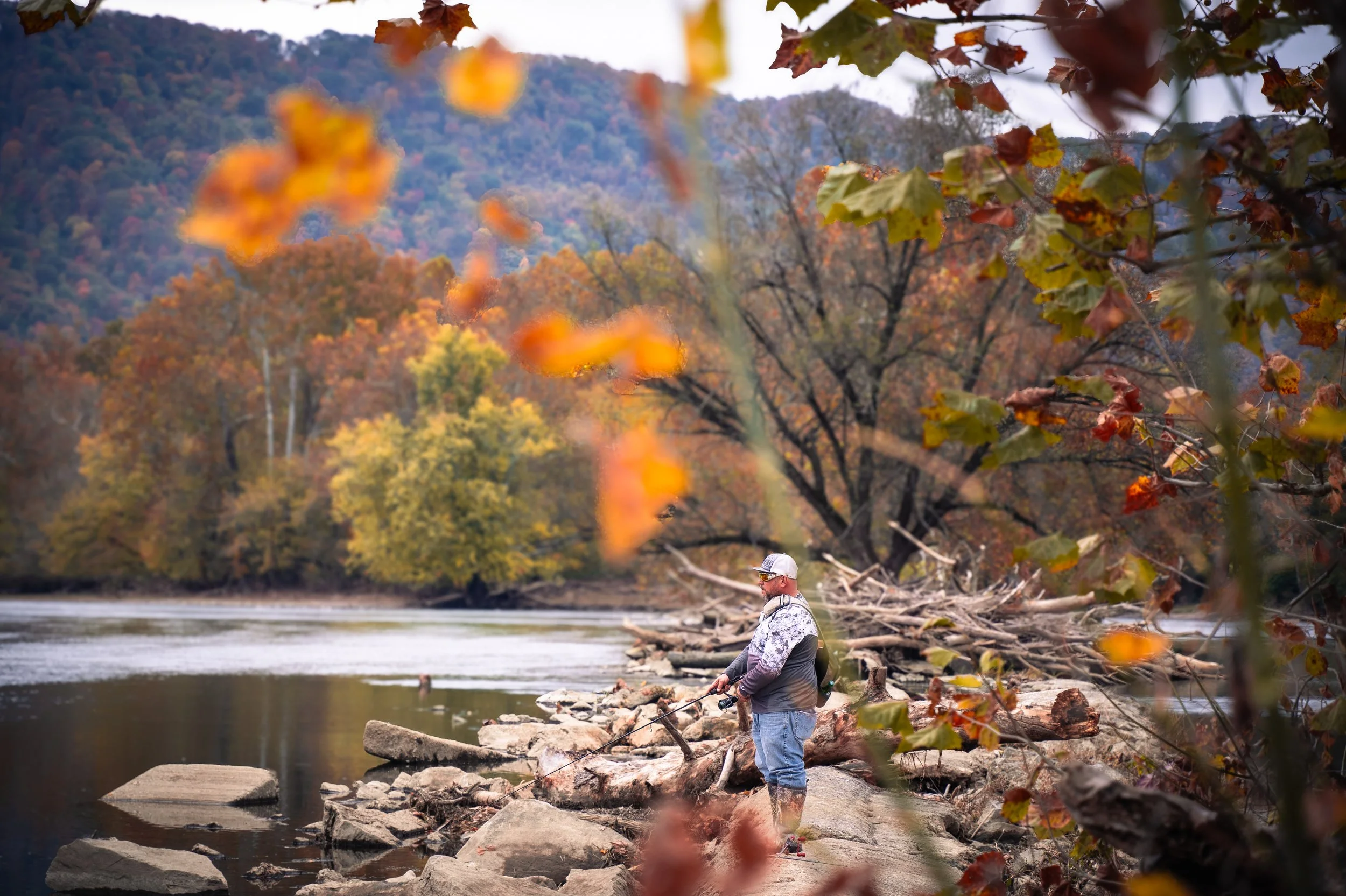
This work asks for a slower pace. When I slow down, the overlooked things come into view: a rusted car, an abandoned structure, a man standing on the river rocks in autumn light, a balloon rising into open sky. It could be almost anything.
The intention is not to make the region seem untouched or to explain it through nostalgia. It is to notice a place that continues to be lived in, one small moment at a time.
Collecting the work
Selected photographs are available as limited-edition fine-art prints. Availability and presentation are specific to the image, so size, edition details, materials, and framing should be reviewed together.
The work may be considered for private collections, professional environments, hospitality spaces, and curated exhibitions. The right placement allows the photograph to contribute to the room without requiring it to dominate.
Continue exploring
View the collection with time to consider the individual photographs. For guidance on choosing work for a room, visit the fine-art placement page or discuss the particular image that interests you.
Collector questions
-
No single size should be assumed across the collection. Available formats depend on the image and its edition details.
-
Prints are supplied unframed unless the individual offering states otherwise. Confirm the presentation before making an acquisition decision.
-
Selected works are available for those conversations. Share the setting, intended scale, and timing so current availability can be discussed.