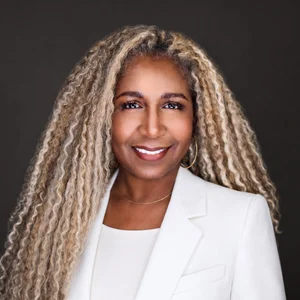
What Makes an Executive Headshot Different From a Regular Portrait
Short answer: An executive headshot is a photograph made to win a decision you are not present for. A portrait is about you. An executive headshot is about what a board member, client, or event organizer concludes in the second and a half before they read your name. Wardrobe, lighting, and expression are chosen for that decision, not for flattery.
Professional Image Minute No. 01 - Yevette Lynn Photography, Kingsport, Tennessee
Key takeaways
A portrait and an executive headshot can use the same camera, lights, and studio. What separates them is the brief: what the photograph is being asked to do.
An executive headshot is judged before your name is read, usually at small size, often beside other people's photographs.
The brief asks three questions. Do you look like someone who runs things? Would a client pick up the phone and call you? Is the background quiet enough that nobody notices it?
None of those answers comes from a filter or an expensive camera. They come from wardrobe, lighting, and expression, all pointed at one question: what does this person want to be trusted with?
When that question is answered before the session, the photograph keeps working for years.
Watch: An Executive Headshot Is a Different Job
The Professional Image Minute is one minute on professional image, published every Thursday. The first episode starts with the distinction everything else depends on. The full transcript is at the end of this post. The sections in between take each line of the episode and show what it changes in practice.
A portrait is about you. An executive headshot is about a decision.
A portrait succeeds when it resembles you and you like it. Its audience is usually people who already know you: family, friends, colleagues. They look at it slowly and they bring context with them.
An executive headshot has a different audience and a different measure of success. It is read by people who do not know you yet, in places where they are deciding something: whether to approve a nomination, shortlist a proposal, book a speaker, or answer an email. They give it a glance, not a study. The photograph has to be read correctly in that glance.
Primary job. Portrait: Resemble you and please you. Executive headshot: Be read correctly by strangers.
Main audience. Portrait: People who already know you. Executive headshot: People deciding whether to trust you.
Viewing time. Portrait: As long as the viewer likes. Executive headshot: About a second and a half.
Typical size. Portrait: Print, frame, full screen. Executive headshot: Thumbnail, bio column, search result.
Context. Portrait: Seen on its own. Executive headshot: Seen beside other people's photographs.
Background. Portrait: Can carry mood or story. Executive headshot: Should go unnoticed.
Measure of success. Portrait: "That looks like me". Executive headshot: "That looks like someone I would call".
Useful life. Portrait: As long as it is loved. Executive headshot: As long as it is accurate to your role. None of this makes one better than the other. They are different assignments. Problems start when a photograph made for the first column is asked to do the work of the second.
What happens in the second and a half before your name
Most people see a face before they read a name. On a leadership page, a board slate, or a search result, the photograph is the first thing processed and the name comes after it. By the time the reader reaches your title, they have already formed a provisional answer to a few plain questions: Does this person seem settled in their role? Prepared? Approachable enough to contact?
That first read is not a verdict, but it sets the direction of everything that follows. A photograph that reads as uncertain, dated, or casual for the setting makes the reader work harder to believe the biography beside it. A photograph that reads as composed and current lets the credentials do their job.
This is why an executive headshot is designed for the glance. Expression has to read at a small size. The face has to separate cleanly from the background. Nothing in the frame should compete with the person.
Where an executive headshot actually lands
The episode lists the places. Each one asks something slightly different of the same photograph.
Board bio. The reader is deciding: Is this person steady enough for oversight? The photograph has to show: Composure and maturity, without stiffness.
Proposal. The reader is deciding: Can this team carry the scope of the work? The photograph has to show: Competence that matches the size of the engagement.
Speaker page. The reader is deciding: Will this person hold a room? The photograph has to show: Presence that still reads at a distance.
Cold email. The reader is deciding: Is this sender a real professional worth answering? The photograph has to show: A clear, recognizable face at signature size.
LinkedIn, beside 12 other people. The reader is deciding: Which of these profiles do I open? The photograph has to show: Clarity and quiet contrast in a grid of faces. Every one of these is a room you will never be in. The photograph attends the meeting, the selection committee, and the shortlist review on your behalf. A regular portrait is not built for that.
The three questions in the brief
Once the job is clear, the brief becomes three questions. Each one changes a specific decision in the session.
1. Do you look like someone who runs things?
This is a question of posture, framing, and stillness. Authority reads through a settled body, shoulders that are not braced, and a frame that gives the head and shoulders room without crowding. It does not require a stern expression. People who run things well tend to look unhurried.
2. Do you look like someone a client would actually pick up the phone and call?
Authority alone can read as distance. The second question balances the first. The expression has to suggest that a conversation with you would be productive and not uncomfortable. For most professionals that is a small, real warmth around the eyes rather than a broad smile. The right balance differs by role. A chief financial officer, a hospital administrator, and a financial advisor answer this question differently, and the photograph should follow the answer.
3. Is the background quiet enough that nobody notices it?
In an executive headshot, a background succeeds when it is forgotten. It should separate you from the frame, hold up at thumbnail size, and sit comfortably next to other people's photographs on the same page. Busy texture, strong color, or a recognizable location pulls the eye away from the face. A quiet tone, chosen to suit your coloring and wardrobe, keeps attention where the decision is being made.
Not a filter, not a camera: wardrobe, lighting, and expression
An expensive camera does not answer any of the three questions. Neither does a filter or retouching done after the fact. The answers are set before and during the session through three choices.
Wardrobe sets the register. It tells the viewer what level of formality your work carries and whether you look current in your role. It also controls how much of the frame competes with your face.
Lighting gives the face shape and makes the expression readable at small sizes. Flat light can make a capable person look tired. Light with direction and shape makes the same person look present.
Expression is directed, not left to chance. Most people do not know what their face is doing in front of a camera, and few should have to. Guided expression is how the second question in the brief gets answered on purpose.
Each of these is worth its own discussion, and wardrobe gets its own Journal post. For this one, the point is that all three answer the same question.
The question underneath everything: what do you want to be trusted with?
Every executive headshot answers one question, whether or not anyone asks it out loud: what does this person want to be trusted with?
A plant manager may want to be trusted with safety and people. A school superintendent may want to be trusted with a community's children and its budget. A founder raising capital may want to be trusted with other people's money and with a long timeline. The camera work is similar in every case. The answer is not, and the answer is what shapes the wardrobe, the light, and the expression.
Three prompts help answer it before a session:
Who decides about you without meeting you first? Name the readers: a board, a client's procurement team, event organizers, recruiters, referral partners.
What would make them hesitate? Too casual for the setting, too severe to approach, out of date, inconsistent with the rest of your firm's photographs.
What do you want them to conclude in one glance? Write it as a short sentence. "Steady enough to oversee this." "Easy to call about a hard problem." That sentence becomes the brief.
Why the right brief keeps working for years
A photograph made for the right job does not need to be replaced every time a trend changes. When the brief is answered with restraint, the result holds up: wardrobe that does not date quickly, a background that does not tie the image to one season or one place, and light that looks like good light rather than a style. The photograph keeps doing its job on every new proposal, panel, and profile.
It stops working when it no longer matches your role. The signs that a headshot needs replacing are covered in Your Professional Headshot Is More Than a Photograph - It's a Trust Builder. The brief described here is how the next one is made to last.
Frequently asked questions
What is an executive headshot?
An executive headshot is a professional photograph made for leaders whose image is read by people deciding whether to trust them: boards, clients, event organizers, and recruiters. Its job is to be read correctly at a glance and at small size, usually before the viewer reads the person's name or title.
Is an executive headshot the same as a portrait?
No. They can be made with the same equipment, but they have different jobs. A portrait is about the person and is judged by whether it resembles and pleases them. An executive headshot is about a decision made by someone else and is judged by whether it reads as capable, current, and approachable in that setting.
Can I use a regular portrait as my executive headshot?
Sometimes, but it often underperforms. Portraits tend to carry mood, location, or a looser crop that competes with the face at thumbnail size. If the portrait was made for a different purpose, it may read as too casual for a board bio or too stylized next to a firm's other leadership photographs.
What background is best for an executive headshot?
The best background is one nobody notices. A quiet, even tone that separates you from the frame, suits your coloring and wardrobe, and sits comfortably beside other people's photographs on the same page. Strong color, busy texture, and recognizable locations usually work against an executive headshot.
Does an executive headshot need an expensive camera or heavy retouching?
No. The qualities that matter in an executive headshot come from wardrobe, lighting, and expression. A filter or heavy retouching cannot add authority or approachability that the session did not capture, and it can make a current photograph look less like the person who walks into the meeting.
Who needs an executive headshot?
Anyone whose photograph appears where decisions are made without them in the room: partners and principals, department heads, board members, nonprofit leaders, founders, speakers, and anyone whose name appears on proposals or leadership pages.
How should I prepare for an executive headshot session?
Decide what you want to be trusted with and who will be looking. List the places the photograph will appear, such as board bios, proposals, speaker pages, email signatures, and LinkedIn. Bring that list and that one-sentence answer to the session. Wardrobe, lighting, and expression are then chosen to fit it.
Full transcript
Professional Image Minute No. 01 - An Executive Headshot Is a Different Job. Running time: one minute.
[0:00] An executive portrait is not simply a nicer image. It's a different job with a different brief. A portrait is about you. An executive headshot? It's about what somebody decides in the second and a half before they even read your name.
[0:18] Think about where it actually lands. Board bio, proposal, speaker page, a cold email, LinkedIn, right next to 12 other people. That photo walks into rooms you'll never be in.
[0:30] So the brief changes. Do you look like someone who runs things? Do you look like someone a client would actually pick up the phone and call? Is the background quiet enough that nobody notices it?
[0:41] None of that comes from a filter or an expensive camera. It's wardrobe, it's lighting, it's expression. All of it pointed at one question. What does this person want to be trusted with? Get that right and the picture works for you for years.
About the Professional Image Minute
The Professional Image Minute is a weekly one-minute series on professional image from Yevette Lynn Photography, an executive headshot and personal branding studio in Kingsport, Tennessee, serving professionals throughout Kingsport, Johnson City, Bristol, and the Tri-Cities region. New episodes are published on Thursdays on YouTube and here on the Journal.
If your current photograph was made for a different job, it may be time to rebuild the brief. Executive and professional headshots in Kingsport.